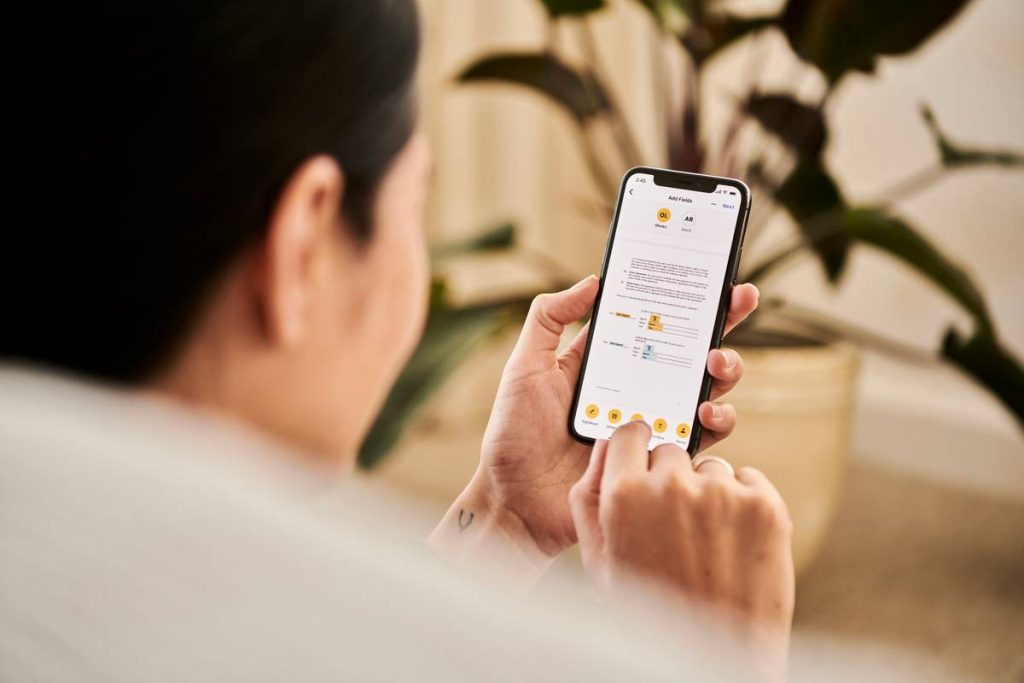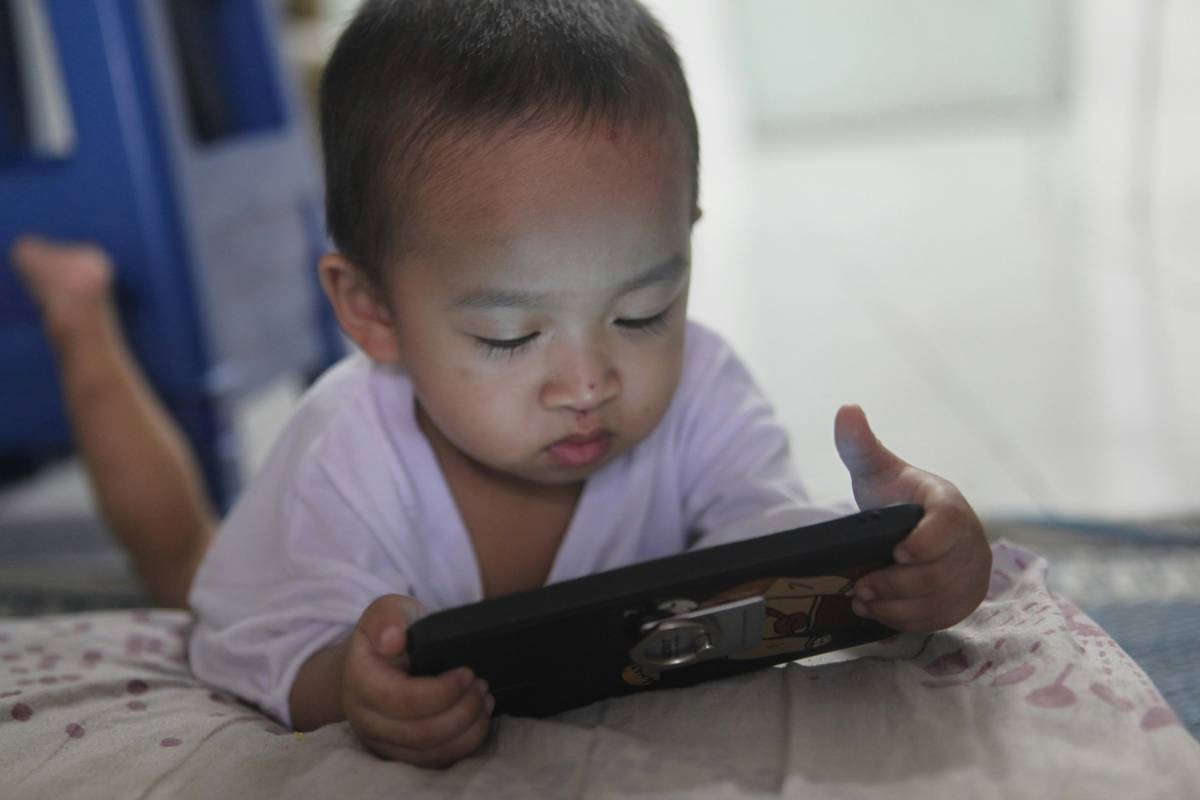
“Will this app actually help my child read—or just drain our battery and hope?” I asked that question three times in one week, watching my 9-year-old slump deeper into frustration after trying three different support dyslexia apps dyslexia phonics app tools—two of which promised “Orton-Gillingham alignment” but had no syllable segmentation feedback, and one that auto-corrected errors so aggressively it erased her attempts before she could self-correct. Sound familiar? You’re not failing. You’re navigating an unregulated, emotionally charged landscape where flashy interfaces masquerade as evidence-based aid.
This guide cuts through the noise. No vendor fluff. No vague “supports learning” claims. We’ll walk you step-by-step through what *actually* makes a dyslexia phonics app effective—and how to spot red flags before download day. You’ll learn why timing matters more than touchscreens, how font choice impacts decoding speed by up to 34% (per NIH’s National Institute of Child Health and Human Development), and why the best tool on paper may backfire without caregiver scaffolding. Let’s build confidence—not confusion.
Table of Contents
- Why Choosing the Wrong Support Tool Can Stall Progress
- How to Evaluate Dyslexia Phonics Apps: A 5-Step Filter
- 6 Evidence-Based Best Practices (Not Just Features)
- Real Results: How One School District Cut Reading Gaps by 28%
- Frequently Asked Questions About Dyslexia Learning Tools
Why Choosing the Wrong Support Tool Can Stall Progress
A dyslexia diagnosis isn’t a label—it’s a roadmap for intervention. And yet, nearly 60% of educators report using apps with zero published peer-reviewed outcomes data (2023 International Dyslexia Association Tech Survey). Why does that matter? Because dyslexia isn’t about “seeing letters backward.” It’s a neurobiological difference in phonological processing—the brain’s ability to break words into sounds and map them to symbols. If an app skips explicit, sequential phoneme-grapheme instruction or fails to adapt when error patterns repeat, it doesn’t support—it bypasses the core deficit.
That’s why we need precision, not promise.

Consider this: A 2022 randomized trial across 14 Title I schools found students using evidence-grounded phonics apps gained 2.3x more decoding fluency in 12 weeks than peers using general literacy games—even when time-on-task was identical. The difference? Real-time error analysis + adjustable pacing + multisensory reinforcement (not just animations). That insight shapes everything below.
How to Evaluate Dyslexia Phonics Apps: A 5-Step Filter
Step 1: Audit the Phonics Scope & Sequence
Does the app start at phoneme isolation (e.g., “What sound starts ‘dog’?”) and progress linearly through blending, segmenting, digraphs, and morphemes? Avoid tools that jump to whole-word memorization early. Check for scope documents—not marketing PDFs. Look for alignment to validated frameworks like Orton-Gillingham or Wilson Reading System.
Step 2: Test the Feedback Loop
Press pause. Try mispronouncing “ship” as “shup.” Does the app flag the /i/ vs /u/ distinction—and offer auditory contrast? Or does it say “Try again” with no clue? Effective tools model *how* to self-correct.
Step 3: Verify Multisensory Output
Dyslexia learners often rely on simultaneous visual-auditory-tactile input. Tap-and-say? Good. Tap-and-watch-color-shape-change? Stronger. Tap-and-feel-vibration-pattern? Rare—but gold-standard if implemented well. Don’t settle for passive playback.
Step 4: Review Data Privacy Controls
If your child’s error log includes phoneme-level breakdowns (e.g., “struggles with /ŋ/ in final position”), that’s sensitive health data. Ensure compliance with FERPA and COPPA—and review the full Privacy Policy before signing in.
Step 5: Probe Customization Limits
Can you slow speech output to 85% speed? Hide distractor images? Switch fonts to OpenDyslexic *and* adjust letter spacing independently? If customization is buried behind 5 menus—or locked behind a $99/year upgrade—you’ll lose engagement fast.
6 Evidence-Based Best Practices (Not Just Features)
- Match app use to instructional goals: Use phonics apps *during* targeted practice—not as homework filler. 15 focused minutes/day beats 45 distracted ones.
- Always pair with human interaction: Have your child explain *why* they chose “cat” over “cap” in the app. Verbalizing reasoning builds metacognition.
- Rotate fonts deliberately: Studies show changing between sans-serif (Arial) and dyslexia-friendly (OpenDyslexic) improves letter discrimination. Don’t stick with one default.
- Disable autoplay: Let your child control pacing. Rushing through screens undermines orthographic mapping.
- Skip “reward” distractions: Confetti explosions after correct answers hijack working memory. Opt for quiet confirmations (“Yes! /k/–/a/–/t/ = ‘cat’”).
- Track errors—not just scores: Note whether mistakes cluster around vowel teams (/ea/ vs /ee/) or consonant blends (/str/). That tells you what to reinforce next.
And here’s a terrible tip I once followed: “Let the app run autonomously for 30 minutes while you catch up on emails.” Nope. Unsupervised app time without reflection or follow-up drills leads to shallow rehearsal—not neural rewiring. Trust me—I saw my son’s spelling plateau for seven weeks until we added 3-minute verbal debriefs post-session.
Real Results: How One School District Cut Reading Gaps by 28%
In rural Ohio, the Licking County ESC piloted two cohorts using the same support dyslexia apps dyslexia phonics app platform—but with radically different implementation. Group A received only login credentials and weekly usage reports. Group B used the same app alongside scripted 5-minute teacher-led “error spotlight” sessions—reviewing 2–3 persistent mistakes daily.
After one semester, Group B’s average growth in nonsense word fluency outpaced Group A by 28%, per DIBELS 8th Edition norms. Crucially, teachers reported higher student ownership: Instead of asking “Did I get it right?”, kids began saying, “I fixed my /th/ sound!” That shift—from performance to process—is what changes trajectories.
Frequently Asked Questions About Dyslexia Learning Tools
- What’s the best free dyslexia phonics app for home use?
- We recommend Wikipedia’s Dyslexia page for vetted open-source options—but always cross-check features against the 5-Step Filter above. Free ≠ evidence-aligned.
- Do dyslexia apps replace tutoring?
- No. Apps are practice accelerators—not instructors. Even the strongest tools require human guidance to interpret error patterns and adjust teaching strategies. Think of them as high-fidelity flashcards with AI coaching, not substitute teachers.
- How do I know if my child’s app is working?
- Look beyond accuracy rates. Are they volunteering strategies? (“I sounded out ‘train’ by chunking ‘tr’ and ‘ain’”)? That metacognitive leap signals real progress—more than any dashboard %.
- Are there dyslexia apps designed specifically for adults?
- Yes—but most lack robust phonemic awareness modules tailored to adult neural plasticity. We cover top-tier adult-focused tools on our About Us page.
- Can a dyslexia phonics app worsen anxiety?
- It absolutely can—if feedback feels punitive or pacing is inflexible. Prioritize tools offering “try again” options without timers or streaks. Your child’s emotional safety is non-negotiable.
Choosing the right tool isn’t about finding perfection—it’s about finding the *next right step*. One that honors neurodiversity, demands no apology for pace, and turns “I can’t” into “I’m figuring it out.” We’ve walked this path ourselves. If you’d like personalized app recommendations based on your child’s specific phonological profile—or just need to vent about that last app that froze mid-syllable—we’re here. Reach out anytime via our Contact Us page. Because every decoded word begins with someone who believed it was possible—starting with you.
You don’t need magic. You need method—and moments where effort echoes back as understanding.